TL;DR: A Kennewick, WA customer’s water damage experience shows what a well-run restoration job looks like: fast response, clear communication, and a team that handles the technical steps so the homeowner doesn’t have to. This post unpacks what “helpful throughout the whole process” actually means in practice.
Most people only think about water damage restoration once, when it’s already happening to them. They don’t know what “quick” or “professional” looks like until they’re standing in a wet hallway trying to figure out who to call. A recent review from a Kennewick, WA customer named Brennen gives a real look at what that experience can be when it goes right.
“They were so helpful throughout the whole water damage process in Kennewick Wa! They were quick, professional, and made a stressful situation so much easier. We really appreciate all their help!” , Brennen, verified Google review
Four words in that review do a lot of work: helpful, quick, professional, and the phrase “the whole process.” Each one points to a specific part of how a water damage job is actually supposed to run. Here’s what’s behind them.
What does “quick” actually mean on a water damage call?
Speed on a water damage job isn’t about rushing. It’s about getting water extraction and drying equipment in place before the clock works against the structure. Standing water and saturated materials start creating conditions for mold growth within 24 to 48 hours, according to the EPA. That window is why response time matters more here than in almost any other home repair.
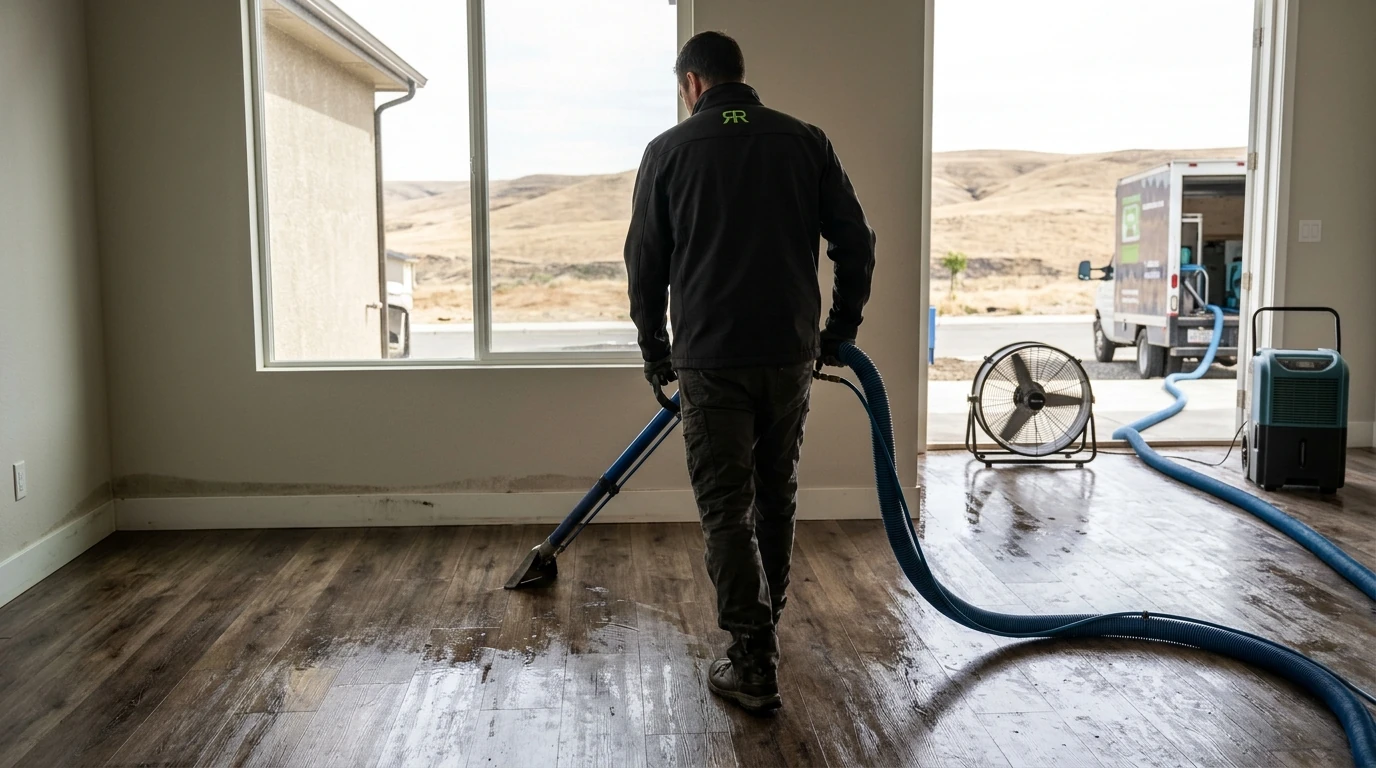
A fast response typically means a technician assesses the source of water, stops ongoing intrusion if it’s still active, and begins extraction the same day the call comes in. Truck-mounted extractors pull standing water first, then air movers and dehumidifiers get positioned to dry what’s left in the walls, subfloor, and framing. Nothing about that process is instant, but the first hours set the pace for everything after.
What makes a restoration crew feel “professional” to a homeowner?
Professional, in a homeowner’s eyes, usually means the crew explains what they’re doing and why, before they do it. It’s less about appearance and more about communication.
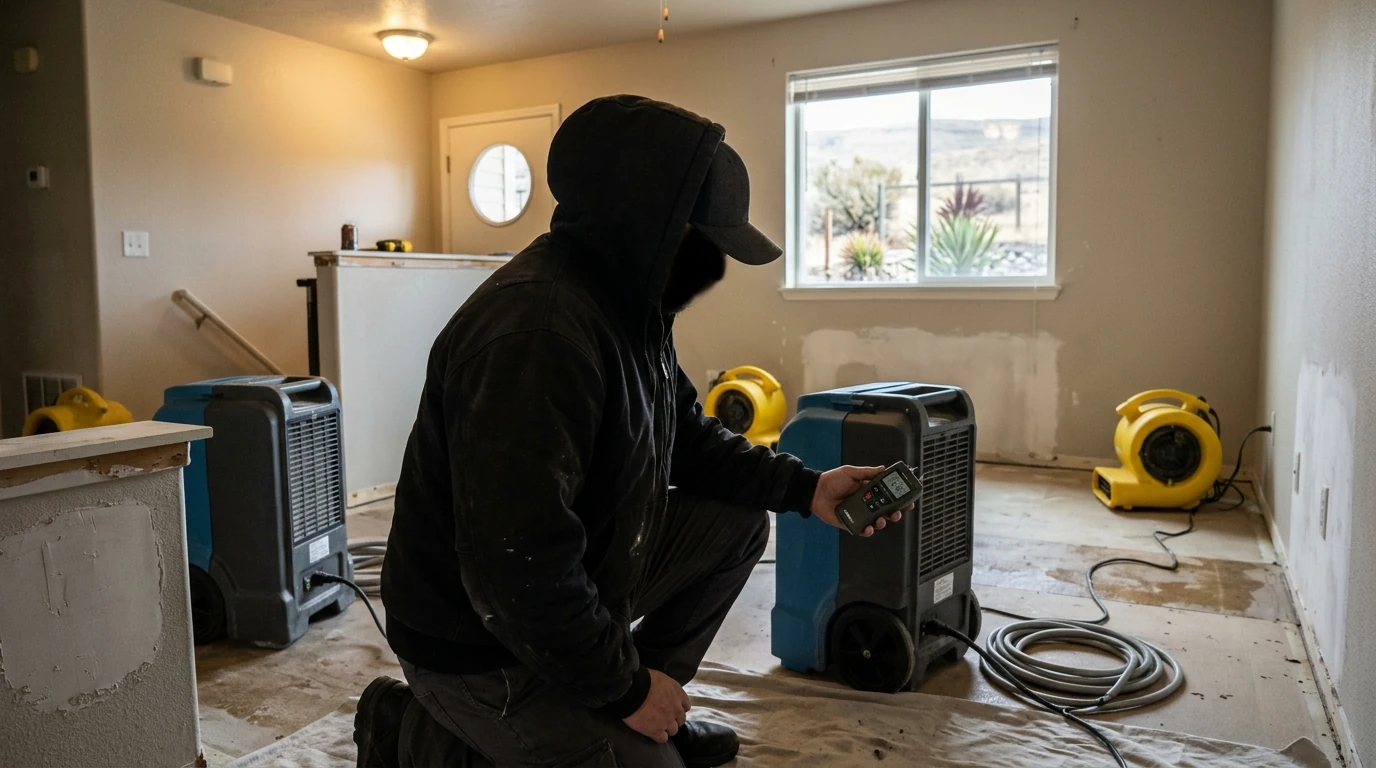
That looks like walking the property with the homeowner to show which materials are wet versus dry, explaining why certain drywall or flooring may need to come out instead of just drying in place, and setting realistic expectations for how many days the equipment will need to stay. Technicians working under the IICRC S500 water damage standard document moisture readings at each visit, which gives the homeowner (and their insurance adjuster) a paper trail instead of a guess.
Why does “the whole process” matter more than just the first visit?
The hardest part of a water damage loss isn’t usually the first day, it’s the week or two of drying, monitoring, and paperwork that follows. A good restoration company stays involved through all of it, not just the initial extraction.
That includes return visits to check moisture levels with a meter, adjusting equipment placement as areas dry at different rates, and communicating with the homeowner’s insurance company about the scope of work. Most homeowners policies cover sudden, accidental water damage, like a supply line failure or an appliance hose that suddenly bursts, but coverage details vary by policy, so documentation from the restoration crew matters for the claim. Triple-I has a plain-English rundown of what standard homeowners coverage typically includes.
For homeowners in the Tri-Cities area who want a deeper look at claims specifics, Does Homeowners Insurance Cover Water Damage? covers what’s typically covered and what’s not.
What should a homeowner do if they’re dealing with water damage right now?
Shut off the water source if it’s still active, move valuables away from the wet area, and call a restoration company before the first 24 hours pass. Waiting usually just adds cost and makes drying take longer.
Homeowners in Kennewick, Pasco, Richland, and the surrounding Tri-Cities area can see a city-specific breakdown of response steps in Who to Call for Water Damage Restoration in Kennewick, WA.
A review like Brennen’s is a snapshot of one job going the way it’s supposed to: fast, communicative, and handled start to finish. If you’re facing a similar situation, Call Restoration Resource at (509) 528-1166 to schedule a water damage assessment.
About Restoration Resource
This case study was written with Logan Olsen and the Restoration Resource team. Restoration Resource is an IICRC Certified Firm founded in 2022, serving Pasco, Kennewick, Richland, and the surrounding Tri-Cities, WA area (license RESTORL764CE, verifiable at Washington L&I). The company offers 24/7 response and handles water damage restoration, fire and smoke damage restoration, mold remediation, sewage cleanup, and storm damage restoration.