
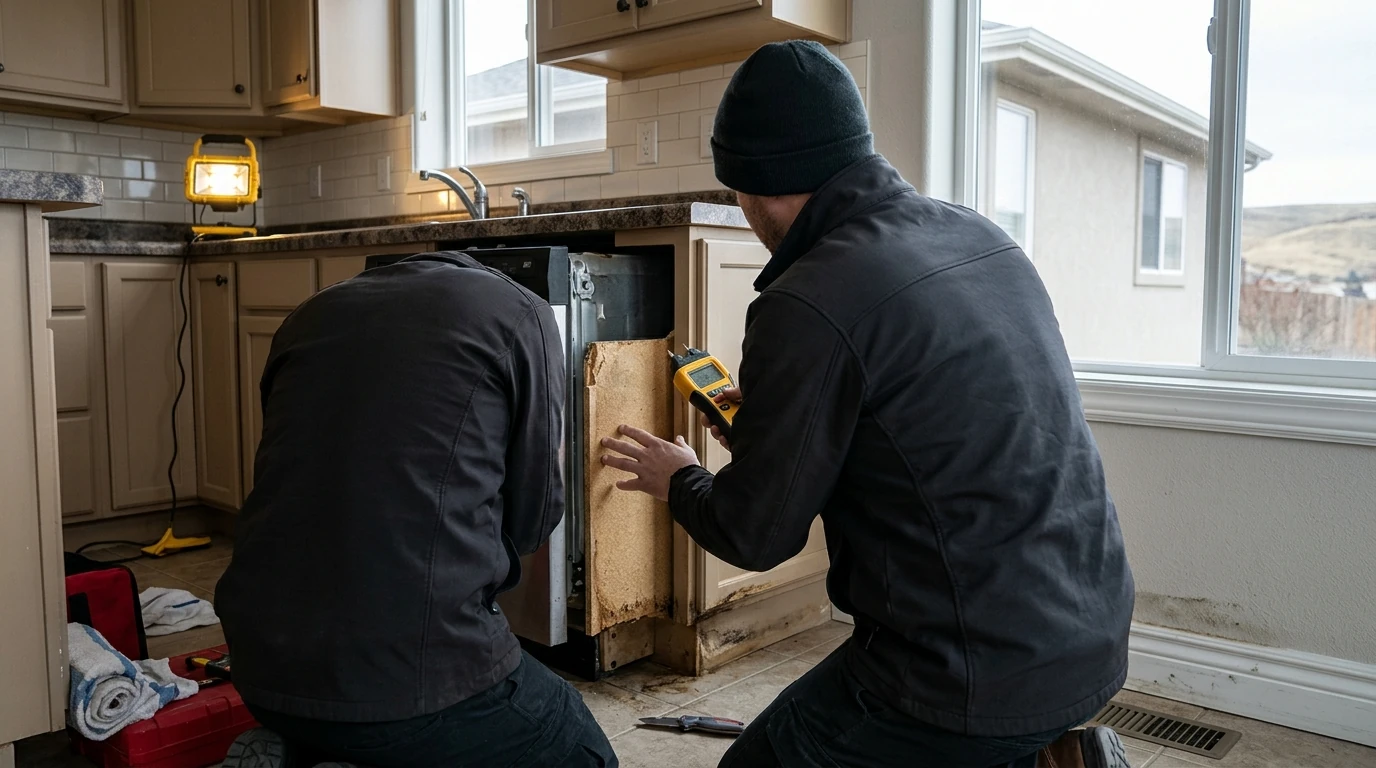
If you just opened the cabinet under the dishwasher and found the particle board swollen or the toe-kick warped, this isn’t a towel-and-fan job. For dishwasher leak water damage in Pasco, call Restoration Resource at (509) 528-1166. They’re an IICRC Certified Firm running 24/7, so the call gets a technician out to map the moisture and start extraction and drying before the cabinet base and subfloor delaminate any further.
Is This a Job for a Restoration Company or a Plumber First?
Call a plumber first only if the dishwasher is still actively leaking and you can’t find or reach the shutoff valve under the sink. Once the water is stopped, the urgent job is the water already soaked into the cabinet, flooring, and subfloor, not the appliance itself.
Most kitchens have a dedicated shutoff valve under the sink for the dishwasher’s supply line. If you can’t locate it, shut off the water at the home’s main valve. A restoration crew doesn’t need the appliance fixed before they start extraction and drying. A plumber or appliance tech handles the dishwasher repair separately, often after the structural side is already underway.
What Happens When You Call for a Dishwasher Leak Cleanup?
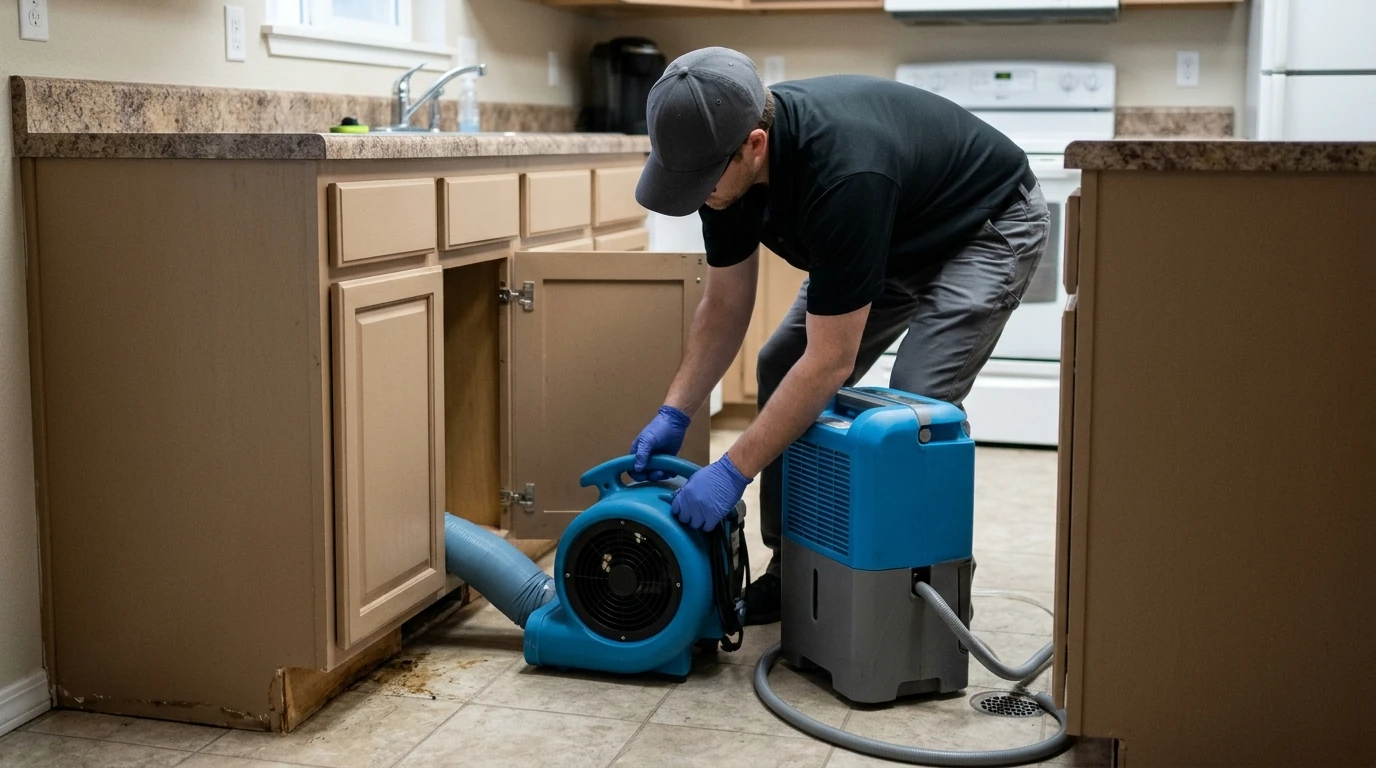
A restoration technician starts with a moisture map, using a penetrating meter to check the cabinet base, the subfloor, and the wall behind the dishwasher before deciding what can be dried versus pulled out. From there the process is standard water cleanup work: standing water extracted, wet toe-kicks and cabinet panels opened or removed for airflow, and air movers and a dehumidifier set to pull moisture out of the subfloor over several days.
The crew also photographs and documents the moisture readings as they go, which matters later if you’re filing a claim. If there’s any question about where water traveled under the cabinets or into an adjoining room, water leak detection tools like thermal imaging or a hygrometer can confirm it before anyone cuts into a wall.
How Do You Know a Dishwasher Leak Has Been Running Longer Than You Think?
A slow leak under a dishwasher usually shows up as a soft or spongy spot in the floor near the appliance, a musty smell when you open the cabinet, or dark staining along the baseboard before you ever see standing water. Those signs mean the leak predates the day you noticed it.
Particle board cabinet bases swell permanently once they absorb water; a swollen toe-kick or a door that no longer closes flush is a reliable tell. Mold can begin growing on wet material within 24 to 48 hours, according to the EPA’s guidance on mold and moisture, so a leak that’s been running for a week or more under a cabinet is a different scope than one caught the same day.
Can the Cabinet Base and Subfloor Be Dried, or Does It Need to Be Replaced?
Particle board cabinet bases almost never dry back to original shape once they swell, so those get replaced, while a plywood subfloor often can be dried in place if it’s caught early and the moisture hasn’t reached the floor joists. Drying wood subfloor to IICRC S500 standard targets typically takes several days of continuous air movement and dehumidification, and the Tri-Cities’ dry climate generally works in your favor once the source is gone.
When the subfloor has delaminated or the cabinet framing is compromised, that’s a job for reconstruction rather than drying equipment. A written moisture log from the restoration crew is usually what settles whether a section gets dried or torn out, so ask for it before any demo starts.
What About the Refrigerator Water Line, Washing Machine, and Other Appliance Leaks?
A refrigerator or ice maker water line failure is usually clean, Category 1 water from the supply side, which is the easiest category to dry and the lowest mold risk if it’s caught quickly. A washing machine is less predictable: a burst supply hose is also clean water, but a leak from the drain hose or an overflow during the wash cycle carries detergent and soil, which puts it in Category 2, sometimes called gray water, the same category as dishwasher discharge.
The handling is similar either way: shut off the supply, extract standing water, and get air moving under cabinets, behind appliances, and along baseboards before it sits long enough to swell wood or seed mold. If a leak under any kitchen or laundry appliance has been running unnoticed and you’re smelling mustiness, a mold remediation assessment is worth adding to the scope before cabinets go back in.
Does Homeowners Insurance Cover a Dishwasher Leak in Pasco?
Most homeowners policies cover sudden, accidental water damage, such as a dishwasher hose that fails without warning, but they generally exclude gradual leaks caused by long-term wear or a leak you knew about and didn’t fix. The Insurance Information Institute outlines this sudden-versus-gradual distinction, and it’s the first thing an adjuster checks on an appliance claim.
Documentation matters here: photos of the swollen cabinet, the moisture readings, and the date you discovered it all support a claim for a sudden failure. For a broader rundown on what’s typically covered, see our guide on whether homeowners insurance covers water damage.
A swollen cabinet base and a damp subfloor don’t get better on their own, and the longer food-contaminated water sits under flooring, the more likely the job turns into a demo instead of a dry-out. Call (509) 528-1166 for a same-day moisture assessment if you’re staring at a wet kitchen floor in Pasco right now.