
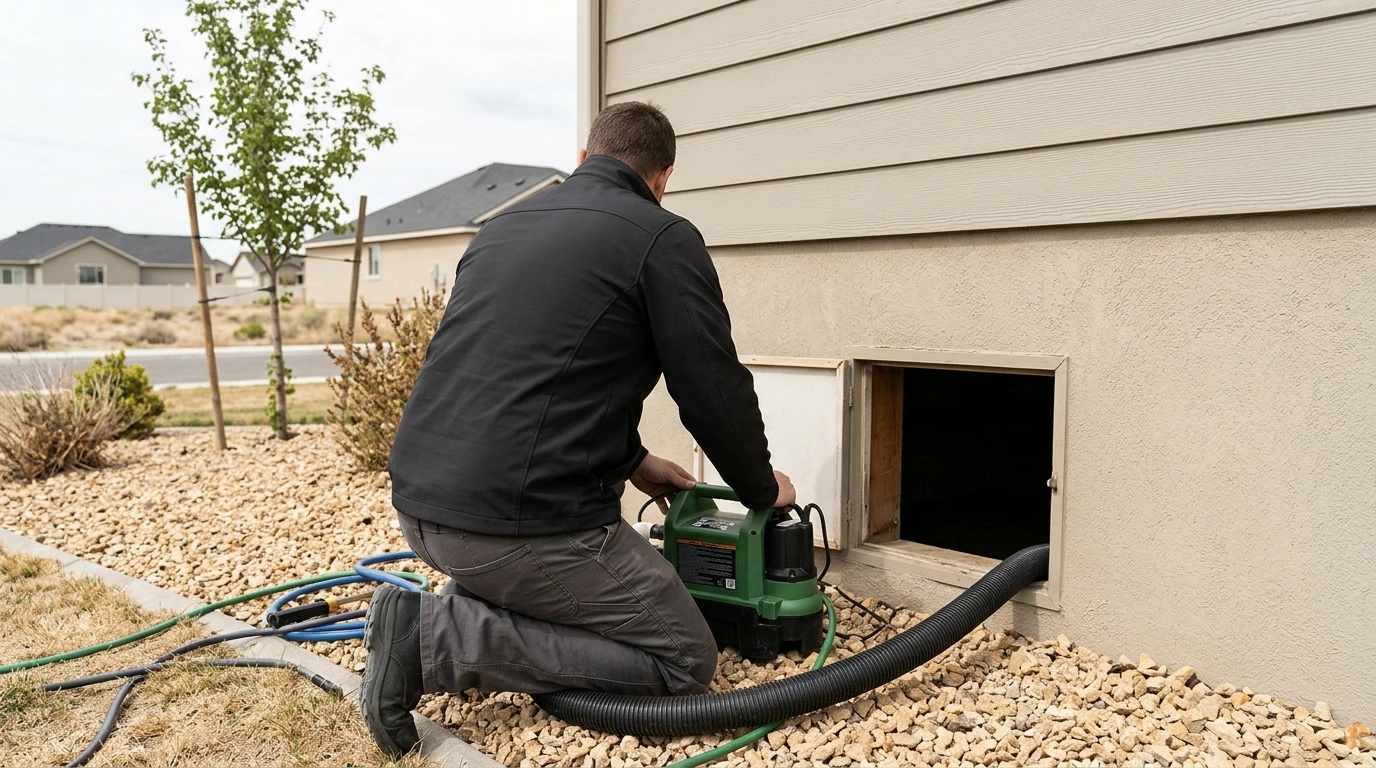
If you just pulled back the crawl space hatch and found standing water, a soaked vapor barrier, or a musty smell coming up through the floor vents, call a water damage restoration company, not a general plumber, unless the leak is still actively running. For a flooded crawl space in Pasco, call Restoration Resource at (509) 528-1166, which runs 24/7 and holds IICRC certifications for water and structural drying. If a pipe is still spraying or a supply line just failed, shut off the water at the main first, then make the call.
Is a flooded crawl space an emergency, or can it wait?
It is an emergency the moment you see standing water, wet insulation, or a sagging vapor barrier under the house, because crawl spaces trap moisture with almost no airflow. Pasco’s housing stock sits on sandy, irrigated soil near the Columbia and Snake River confluence, and a lot of older homes in and around Pasco and Kennewick still have vented crawl spaces instead of sealed ones. That combination means water that gets in does not dry on its own.
Wood framing exposed to standing water for more than a day or two starts to swell, and mold can begin colonizing damp wood and insulation within 24 to 48 hours, according to the EPA. A flooded crawl space is not a wait-and-see problem, even when the water looks shallow.
Who do you call first, a plumber or a restoration company?
Call a plumber first only if water is actively flowing from a pipe, fitting, or appliance line you cannot shut off yourself. Once the source is stopped, or if the water came from somewhere other than your own plumbing, a restoration company handles the extraction and drying.
A few common causes and who typically handles them:
- Burst or leaking supply pipe under the house: shut off the main, call a plumber for the repair, call a restoration crew for extraction and drying (often the same visit if the company does both).
- Irrigation line or sprinkler system leak near the foundation: this is a landscaping or irrigation contractor issue for the source, and a restoration call for anything that made it under the house.
- Sewer line backup into the crawl space: this is Category 3 water, grossly contaminated, and needs a crew trained in sewage cleanup with the right PPE and disposal protocol, not a DIY pump-out.
- Groundwater or storm runoff seeping in: common after heavy snowmelt or a wet spring, and it keeps coming back until drainage or grading is addressed alongside the cleanup.
Water that starts clean, like a fresh supply line break, is classified Category 1 under the IICRC S500 standard. But it does not stay clean sitting in a crawl space against soil, insulation, and ductwork for more than a day, which is one reason a fast response matters more than it sounds like it should.
What does crawl space water cleanup cost, and will insurance pay for it?
Cost depends mostly on how much standing water there is, whether insulation and vapor barrier need to be torn out, and how long the water sat before anyone caught it. Small, caught-early pipe leaks with a partial vapor barrier replacement run toward the lower end of typical restoration pricing; a crawl space that sat flooded for days with saturated insulation across the whole footprint costs more because more material has to come out and more equipment runs longer to dry the subfloor and joists. A written scope after an on-site inspection is the only reliable number, since every crawl space and every loss is different.
On insurance: a sudden, accidental loss like a supply line that just failed is typically covered under a standard homeowners policy, per the Insurance Information Institute. Gradual seepage, long-term moisture, or groundwater intrusion usually is not, and a sump pump failure or backup needs a separate water backup endorsement to be covered at all. Our guide to what to do in the first 24 hours covers the documentation that protects a claim either way.
What happens when you call for a flooded crawl space?
The first call is mostly triage: where the water came from, whether it is still flowing, how long it has been sitting, and how to access the crawl space. From there, a crew typically:
- Confirms the water category and shuts off any active source if it has not been handled already.
- Pumps out standing water and extracts what has soaked into the vapor barrier and soil surface.
- Removes wet insulation and vapor barrier that cannot be dried in place, since batt insulation rarely dries clean once saturated.
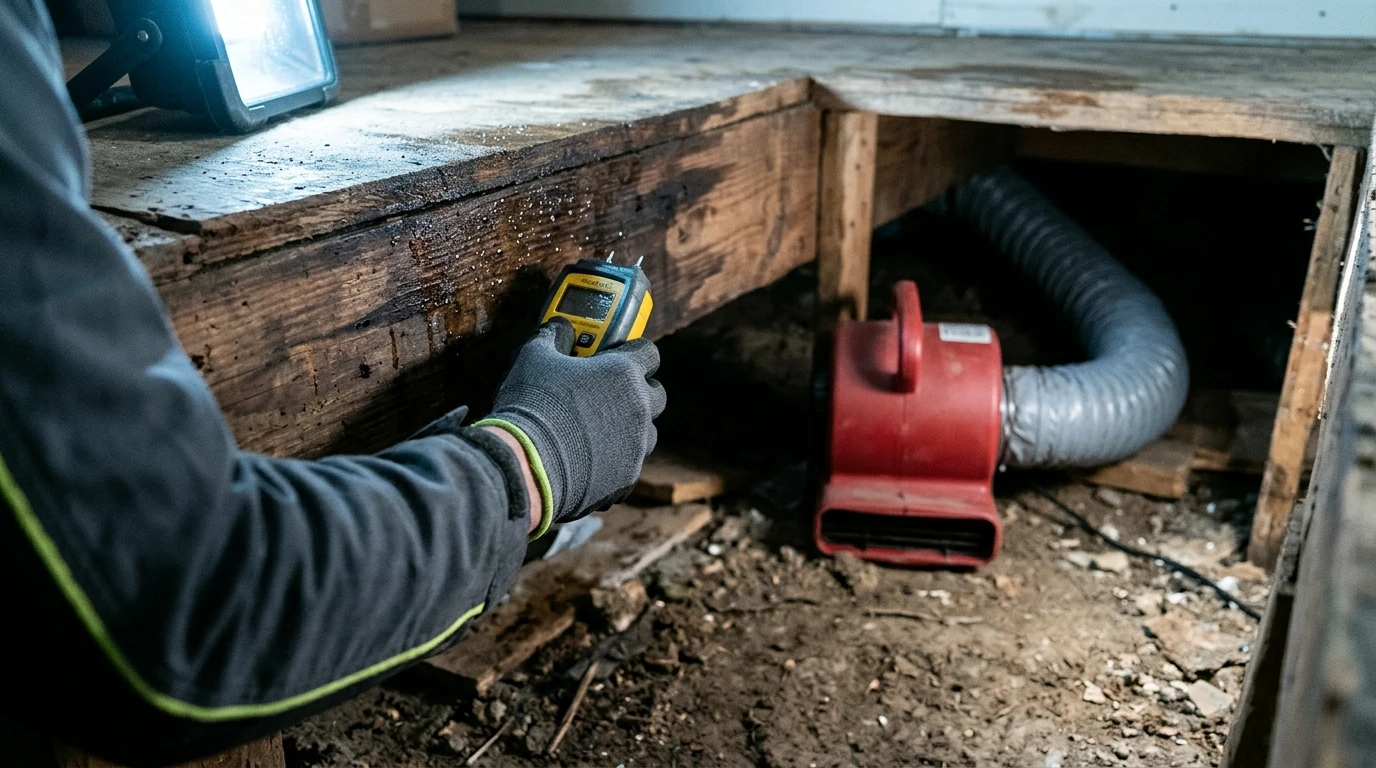
- Sets dedicated air movers and a dehumidifier sized for the crawl space footprint, then monitors moisture in the subfloor and joists with a meter until readings return to normal.
- Applies an antimicrobial treatment on exposed wood when conditions warrant it, consistent with IICRC S500 guidance, to slow mold growth while drying finishes.
Crawl space access is tighter and the work is slower than an open basement, so expect drying to take longer than a comparable room-sized loss upstairs.
Standing water under the house: how worried should you be about mold?
Mold risk in a flooded crawl space is high, because the space is dark, enclosed, and often poorly ventilated to begin with. If drying does not start within a day or two, colonization on wood framing and insulation is a realistic outcome, not a scare tactic.
If you already smell a musty odor or see dark staining on joists when you checked the hatch, that is worth flagging to whoever inspects the crawl space. A dedicated mold remediation visit, separate from the water extraction, is sometimes needed when growth has already started before the water is caught.
Getting water out of a crawl space fast is the single biggest factor in whether it stays a one-day drying job or turns into a mold remediation project. If you are standing at the hatch right now, start with the water cleanup page for what a visit looks like, or go straight to contact to get someone on the phone.
FAQ