
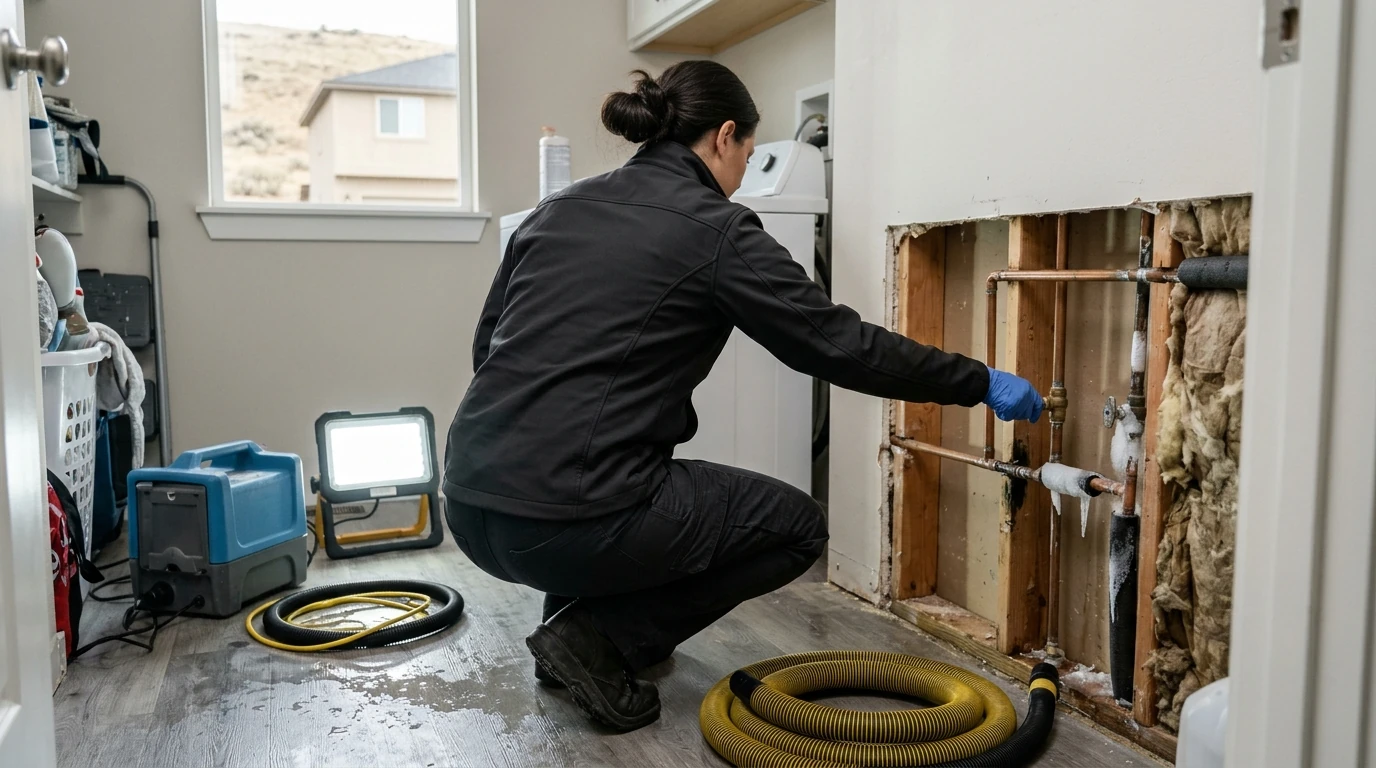
TL;DR: If a frozen pipe bursts in Pasco, shut off the main water valve first, then call a 24/7 water damage restoration company to start extraction and drying, which protects the structure and your insurance claim. A plumber repairs or replaces the broken section of pipe, but does not dry out the house. Call your insurer after mitigation is already underway, not before.
It is 5 a.m., the furnace has been cycling all night, and you just heard a pop from behind the laundry room wall. Water is already spreading across the vinyl toward the hallway. In that moment it does not matter whether the pipe burst because of a hard freeze in an uninsulated crawlspace or a supply line in an exterior wall. What matters is the order you make calls in, because the wrong order costs you drying time, and drying time is what keeps a burst pipe from turning into a mold problem. Call Restoration Resource at (509) 528-1166 once the water is shut off. They are a 24/7 IICRC Certified Firm based in Pasco with a 5.0 Google rating across 42 reviews, and they coordinate the drying and the insurance documentation so you are not managing two separate vendors mid-emergency.
Do I call a plumber or a restoration company first after a frozen pipe bursts?
Call whoever stops the water fastest, which is usually yourself at the main shutoff valve, then call a restoration company before a plumber. A plumber fixes the broken pipe itself, but they generally do not run extraction equipment, commercial dehumidifiers, or document the loss for a claim. A restoration crew does both the water removal and the structural drying, and can usually recommend or coordinate a plumber for the actual pipe repair if you do not already have one.
The exception is a flowing leak you cannot stop at the main valve. In that case, call a plumber immediately, since no amount of extraction keeps up with an open supply line. If the water is anywhere near an electrical panel, outlet, or a water heater that is still powered, treat that as a hazard first: cut power at the breaker if you can do so safely, and treat standing water near wiring as a reason to wait for a professional before walking through it.
What should I do before anyone arrives?
Shut off the main water valve, then stop. Do not run a wet-dry vac through standing water near outlets, and do not point a space heater at the break to try to thaw anything further upstream, since that can create a second failure point. For the full room-by-room shutoff and safety sequence, see our burst pipe emergency checklist. Photograph the damage before anything is moved, since those photos become part of the insurance record.
What happens once the water removal crew arrives?
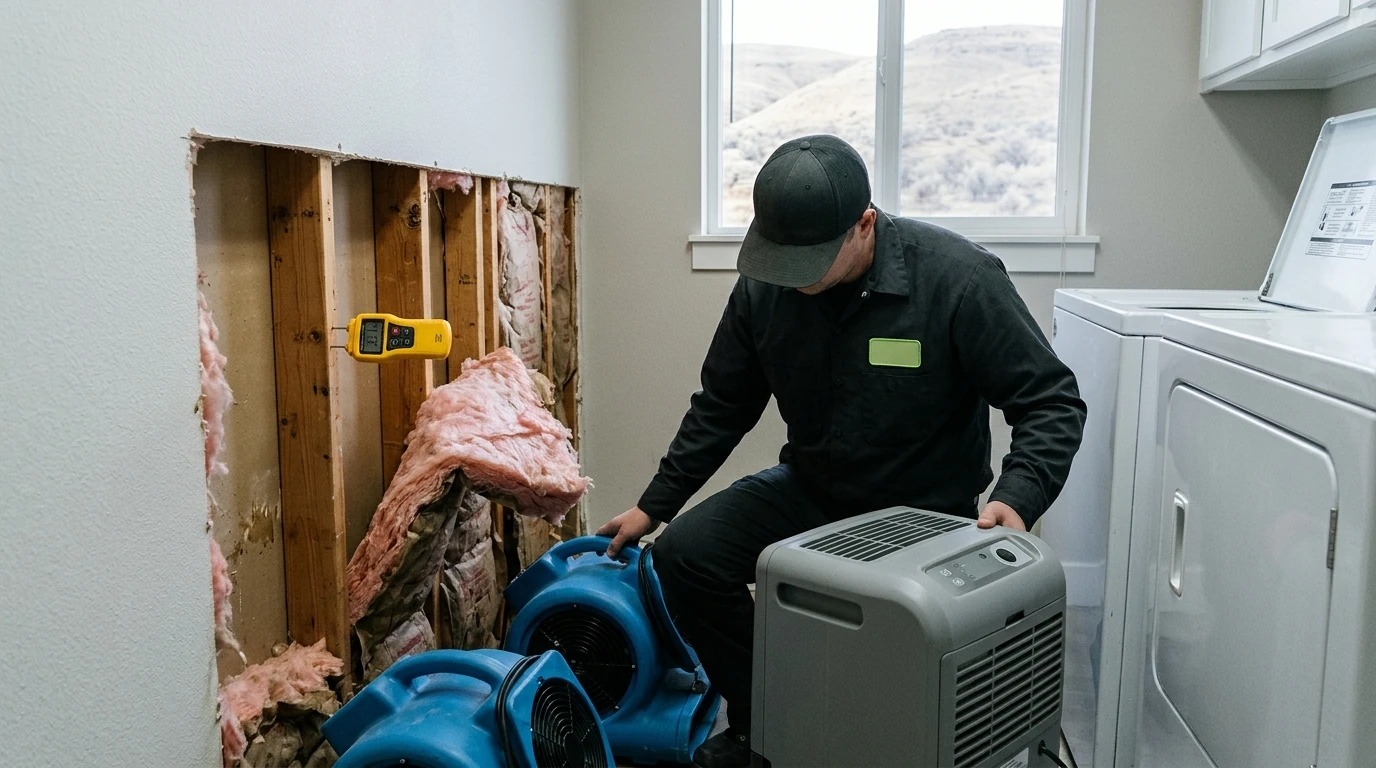
The crew’s first job is extraction, pulling standing water with truck-mounted or portable units so drying equipment can start working immediately. A frozen pipe burst is typically Category 1, clean, water at the start, but water that sits for more than a day or two against drywall and insulation can degrade into Category 2 as it picks up contaminants from building materials, which is one reason speed matters.
After extraction, technicians set air movers and low-grain-refrigerant dehumidifiers and take moisture readings in the affected materials, drying to the moisture targets described in the ANSI/IICRC S500 water damage restoration standard. Most residential drying jobs run three to five days of equipment runtime, though a wall cavity or subfloor that stayed wet longer can take longer to come back into range. Materials that cannot dry in place, like saturated baseboard or wet insulation, usually come out rather than risk trapped moisture behind a wall.
What should I have ready for the insurance claim?
Have your policy number, the photos you took before cleanup started, and a rough timeline of when you noticed the leak. Most homeowners policies cover sudden, accidental water damage like a burst supply line, though coverage details and deductibles vary by carrier, so check your specific policy or ask your agent directly, and see the Insurance Information Institute’s guide to what standard homeowners insurance covers for the general pattern. A written drying scope and moisture logs from the restoration crew give the adjuster something concrete to work from, which tends to move the claim faster than a verbal description alone.
Tri-Cities winters bring sub-freezing nights starting in late November, and uninsulated crawlspaces, garage sillcocks, and exterior-wall plumbing in Pasco, Kennewick, and Richland homes are the usual failure points. If you have not insulated those lines yet, this is the window to do it before the first hard freeze, not after. If a pipe has already let go, call Restoration Resource at (509) 528-1166 to get extraction and drying started, or request service online.
FAQ
Who should I call first for a frozen pipe burst in Pasco? Shut off the main water valve yourself, then call (509) 528-1166 for 24/7 water extraction and drying. Call a plumber separately for the actual pipe repair, and call your insurer once mitigation is underway so the claim reflects documented, in-progress work rather than an undried loss.
Is water from a frozen pipe burst considered clean water? It usually starts as Category 1, clean, water under the IICRC S500 standard, since it comes from a sanitary supply line. If it sits against drywall, flooring, or insulation for more than a day or two, it can degrade toward Category 2 as it absorbs contaminants from those materials.
Will my homeowners insurance cover a frozen pipe burst? Most standard homeowners policies cover sudden, accidental water damage from a burst pipe, but coverage and deductibles vary by carrier and policy. Gradual leaks and damage from poor maintenance are typically excluded, so check your specific policy language or ask your agent.
How fast does mold start after a pipe bursts? The EPA notes mold can begin growing on wet materials within 24 to 48 hours. That is the main reason to start extraction and drying the same day as the leak rather than waiting to see how bad it looks once things dry on their own.
Do I need a plumber if the restoration crew already dried everything? Yes. Drying stops secondary damage like mold and warped flooring, but it does not repair the broken section of pipe. You still need a plumber to replace or repair the failed line before the water is turned back on to that fixture or area.