
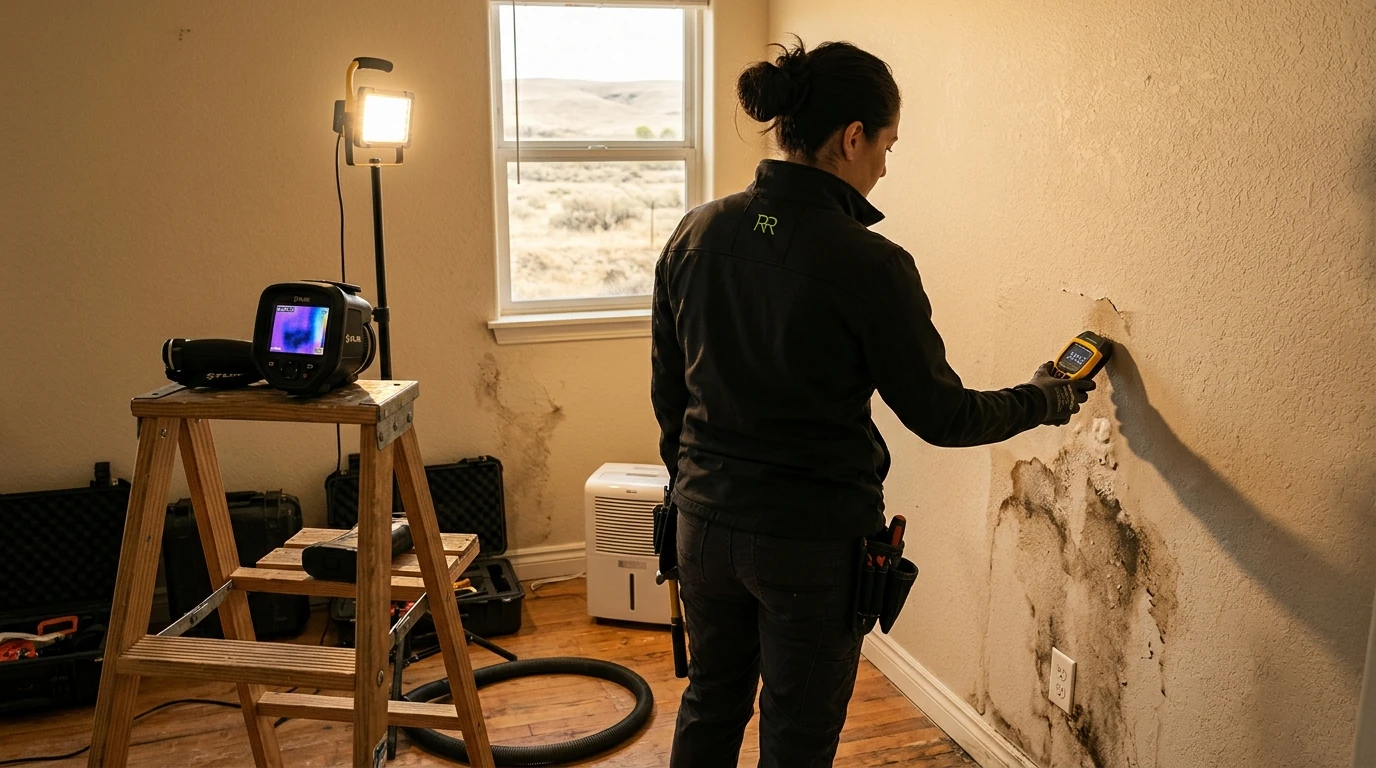
For water damage inside a wall in Pasco, call Restoration Resource at 509-528-1166 to get a moisture assessment started. The company is an IICRC Certified Firm that answers 24/7, so a tech with a moisture meter and a thermal camera can be looking at the wall the same day instead of waiting until Monday to find out whether the drywall has to come out.
Plumber or Restoration Company First?
Call whichever one stops the water fastest, then call the other. If a pipe is actively leaking inside the wall, a licensed plumber needs to shut off the source or isolate that line; a restoration crew can’t dry a wall that’s still being fed water. If the leak has already been shut off (or it was a one-time event like a washing machine supply line that someone caught quickly), the drying crew is the more urgent call, because the clock on hidden moisture and mold starts the moment the wall got wet, not when someone discovers it.
Many Pasco homeowners end up needing both calls in the same day. If you’re not sure which situation you’re in, start with the restoration company. A tech can tell you over the phone whether this sounds like an active leak that needs a plumber first, and can usually get someone out to confirm the source and start assessment moisture at the same visit.
What Happens When You Call
A tech will ask a few quick questions before dispatching: when you noticed the stain or soft spot, whether the water source is stopped, and roughly where in the house it is (interior wall, exterior wall, under a window, near a bathroom). Have the address and a general sense of the timeline ready; that’s most of what’s needed to start.
On arrival, the first tool out is a moisture meter, not a demo hammer. The tech checks the wall surface, the baseboard, and the surrounding studs to map how far the water traveled before anyone decides what comes out and what gets dried in place.
Signs Water Is Inside a Wall, Not Just on the Surface
A stain that keeps growing after the visible leak is fixed means water is still moving inside the cavity. Other signs include bubbling or peeling paint, drywall that feels soft or spongy when you press it, swollen or separating baseboard, and a musty smell that’s stronger near one section of wall than the rest of the room.
In Pasco’s stucco and lap-sided homes, water can also travel sideways inside a wall cavity along a stud or a header before it ever shows up on the surface, which is why a visible stain is often smaller than the actual wet area behind it.
How Crews Decide: Dry in Place or Flood Cut
A moisture meter and thermal camera beat a guess because they show exactly how far the water spread inside the wall, not just where it’s visible. A pinless moisture meter reads moisture content through the drywall face, and a thermal camera flags temperature differences that usually mark wet insulation or a wet stud bay, so the crew can mark the actual wet boundary before cutting anything.
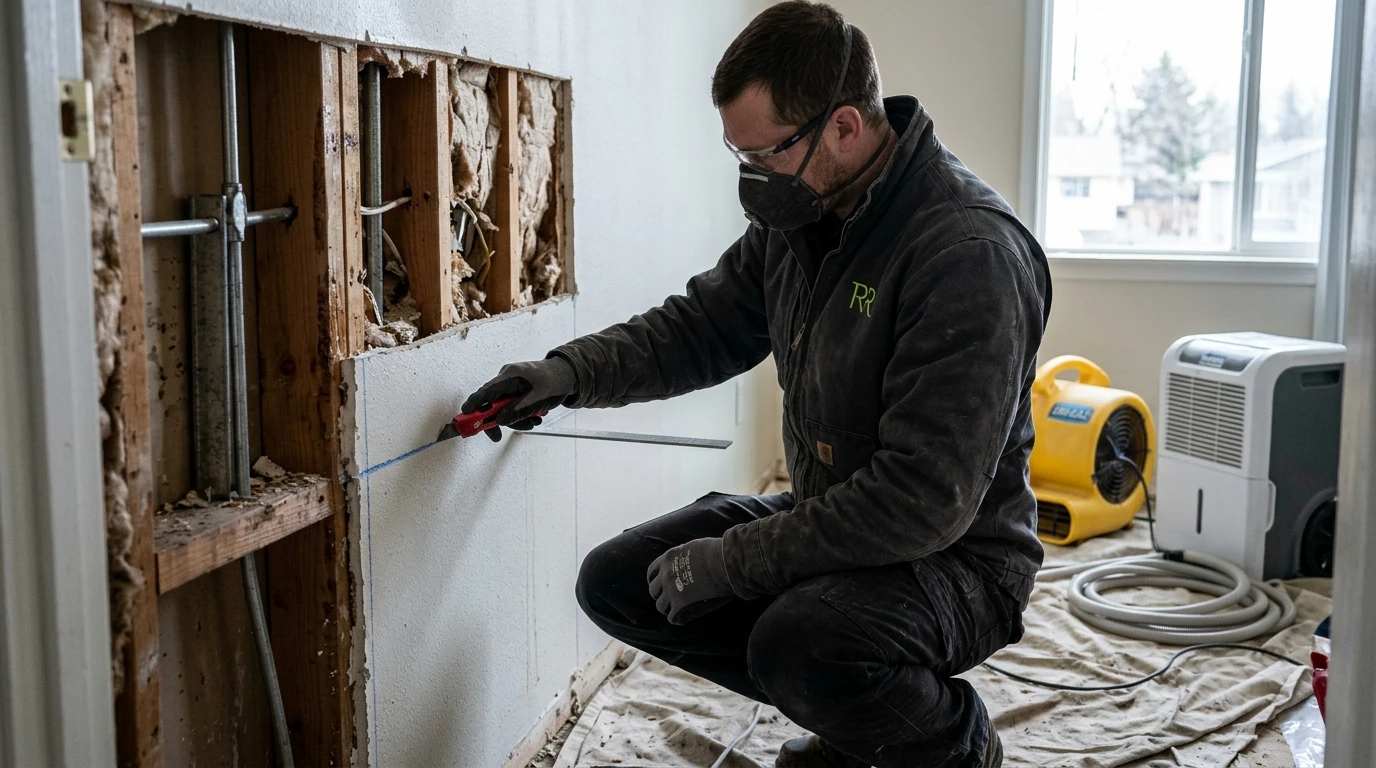
If the readings show the water stayed limited to a small area and the drywall and insulation are still structurally sound, the crew sets air movers and a dehumidifier and dries the wall in place, usually opening a small access hole or two to get airflow into the cavity. If the water soaked a larger section, sat for more than a day or two, or the water category was contaminated (gray or black water), the wet drywall and insulation typically come out in what’s called a flood cut, a horizontal cut made a set distance above the visible water line so nothing wet is left hidden behind the new drywall. The IICRC S500 standard is the industry reference restoration crews work from when making that call.
Why the 24 to 48 Hour Window Matters
Mold can begin growing on wet drywall and insulation within 24 to 48 hours, according to the EPA, which is why the decision to dry in place or cut it out usually gets made fast rather than left for a few days to see what happens. A wall that looks fine on the outside can still be growing mold on the back side of the drywall or inside the insulation, which is one reason a mold inspection sometimes follows a wall leak even after the drying is done, especially if the water sat for a while before anyone noticed it. If you suspect a slow leak that’s been going on for weeks rather than hours, a water leak detection visit can locate the source before more of the wall gets opened up, and a mold inspection and testing visit can confirm whether anything needs remediation once the area is dry.
What Insurance Usually Asks For on a Wall Leak
Most homeowners policies cover sudden, accidental water damage, like a supply line that suddenly fails inside a wall, but they typically exclude damage from a leak that was gradual or went unaddressed for a long time. Insurers generally want photos of the damage before anything is cut out, a record of when the leak was discovered and when it was stopped, and documentation of the drying or flood-cut work performed. Our first-24-hours guide walks through what to photograph and save before any repair work starts, which matters whether a plumber, a restoration crew, or both end up on the job.
If the wall is wet right now, don’t wait to see if it dries on its own. Schedule a moisture assessment so a tech can map how far the water traveled and tell you honestly whether the wall can be dried in place or needs to come out.
About Restoration Resource
Restoration Resource is an IICRC Certified Firm serving Pasco, WA since 2022, licensed under RESTORL764CE. Their technicians hold IICRC water (WRT), structural drying (ASD), and mold (AMRT) certifications and handle water damage restoration, water cleanup, mold remediation, sewage cleanup, fire and smoke damage restoration, and storm damage restoration across the Tri-Cities, with 24/7 phone coverage for active leaks.