
TL;DR: Water extraction alone (pulling standing water and setting up drying equipment, not full repairs) typically costs $300 to $4,000 in the Pasco area. The range depends on how much water, how contaminated it is (Category 1, 2, or 3), what kind of flooring is affected, and how many days of equipment rental the drying takes. A burst supply line in one carpeted bedroom sits at the low end; a sewage backup across multiple rooms sits at the high end.
If a water heater just failed in your West Pasco garage or a supply line let go under a Richland kitchen sink, you’re probably staring at wet carpet or standing water on tile and wondering what the cleanup bill looks like before you even call anyone. Water extraction and full water damage restoration are not the same line item, and knowing the difference helps you read a scope of work without getting surprised later.
What does water extraction actually cost?
Most water extraction jobs in the Tri-Cities area run between $300 and $4,000, with a single room of clean-water extraction on the low end and multi-room Category 3 jobs on the high end. The number reflects labor, extraction equipment, and the first several days of drying equipment, not drywall repair, flooring replacement, or reconstruction.
Here’s a general breakdown by scenario:
| Scenario | Typical Range |
|---|---|
| Single room, Category 1 (clean) water, carpet | $300 to $700 |
| Single room, hard flooring (tile, LVP, hardwood) | $400 to $900 |
| Multiple rooms, Category 2 (gray) water | $1,000 to $2,500 |
| Category 3 (black water/sewage) extraction with antimicrobial treatment | $1,500 to $4,000 |
| Air mover rental, per unit per day | $35 to $75 |
| LGR dehumidifier rental, per unit per day | $75 to $150 |
These are industry-typical figures, not a quote. Every loss is different, and Restoration Resource provides a written scope before any work begins so you know exactly what you’re paying for and why.
What drives the price up or down?
The biggest cost drivers are the water’s category, the square footage affected, and how many days of equipment it takes to get the structure dry. Flooring type and how fast the water was caught matter almost as much.
Water category. Category 1 water (a clean supply line or water heater) is the cheapest to handle because materials can often be dried in place. Category 2 water (washing machine discharge, a toilet overflow with no feces) usually means more aggressive cleaning and sometimes removing porous materials. Category 3 water (sewage, a backup from beyond the trap, flood water) almost always means pulling wet carpet pad, baseboards, and sometimes drywall, plus antimicrobial treatment, which raises both labor and disposal cost. See the IICRC S500 standard for how these categories are defined.
Square footage and flooring. A single bedroom with carpet is far cheaper to extract than an open-concept living and kitchen area with hardwood, because hardwood (a Class 4, specialty-drying material) often needs specialty drying mats and a longer equipment cycle.
How long the water sat. Water caught within hours costs less to dry than water that sat for two or three days, because standing water that has wicked up drywall or swelled baseboards simply takes more equipment-days and more labor to reverse.
Equipment days. Extraction is usually a same-day visit. Drying is the part that runs up the clock: a typical structural dry-out takes 3 to 5 days of air movers and dehumidifiers running continuously, verified with daily moisture readings rather than guesswork.
For the full picture of what a complete water damage job costs in Washington, including repairs and reconstruction after extraction and drying are done, see our Washington water damage restoration cost guide.
Will homeowners insurance pay for water extraction?
Most homeowners policies cover water extraction when the water loss is sudden and accidental, like a burst pipe or a failed appliance hose, but they generally exclude gradual leaks and flood water. Extraction and drying are usually billed under the same claim as the rest of the water damage repair.
A policy typically will not cover a slow leak under a sink that’s been dripping for months, because that falls under maintenance and wear, not sudden damage. It also will not cover flood water, surface water, or a sewer backup unless you carry a separate flood policy or a water backup endorsement. Rising groundwater and storm surface water require flood insurance through the NFIP, a standard homeowners policy does not cover it.
Documentation matters for the claim either way. Photograph the standing water before anything is moved, keep the moisture readings from the drying equipment, and keep receipts. For a breakdown of what’s typically covered and what isn’t, see our guide on homeowners insurance and water damage or the Insurance Information Institute’s overview of standard homeowners coverage.
What happens during a water extraction job?
A typical extraction and dry-out follows four steps: assess the category and extent of the water, pull standing water with pumps or truck-mounted extractors, place drying equipment, then monitor moisture daily until the structure reads dry.
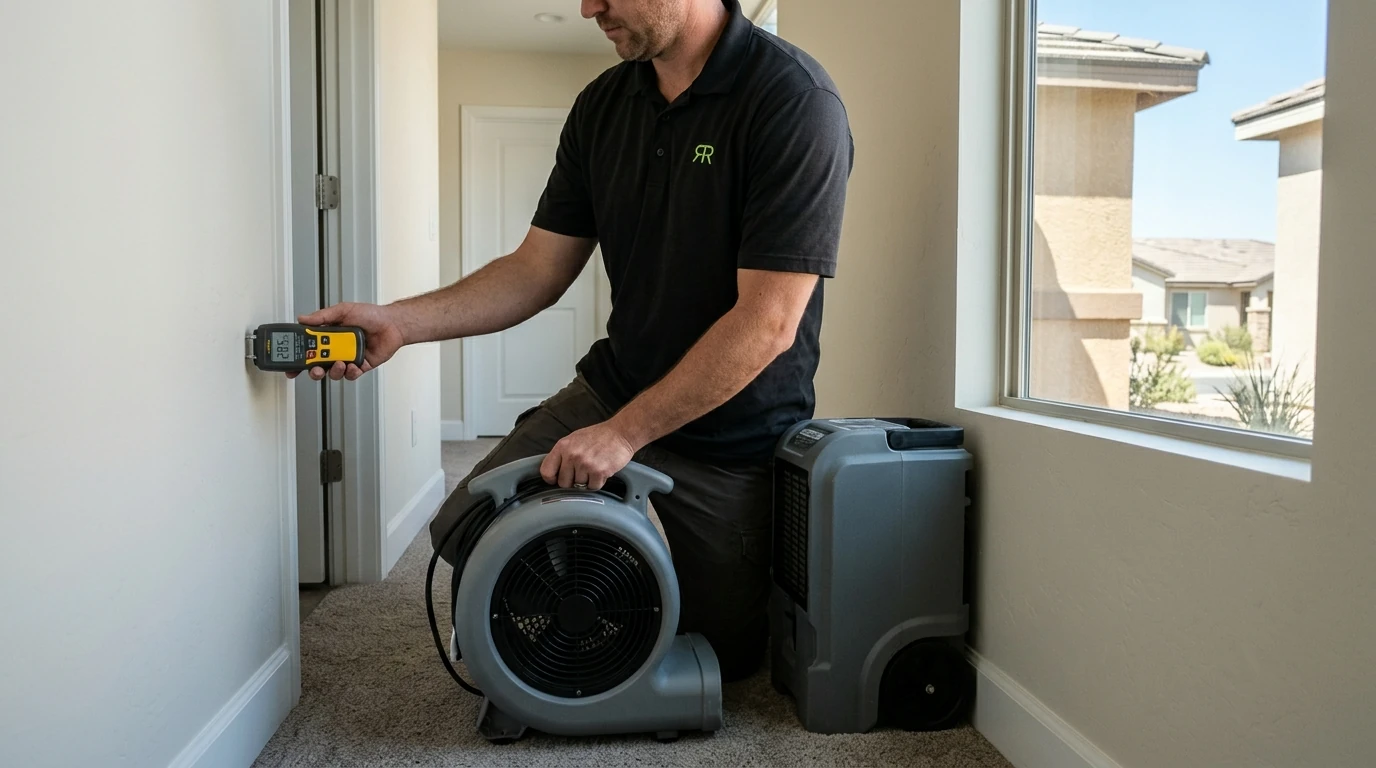
- Assessment. A technician identifies the water category, checks for moisture behind walls and under flooring with a moisture meter, and documents the affected square footage for the insurance file.
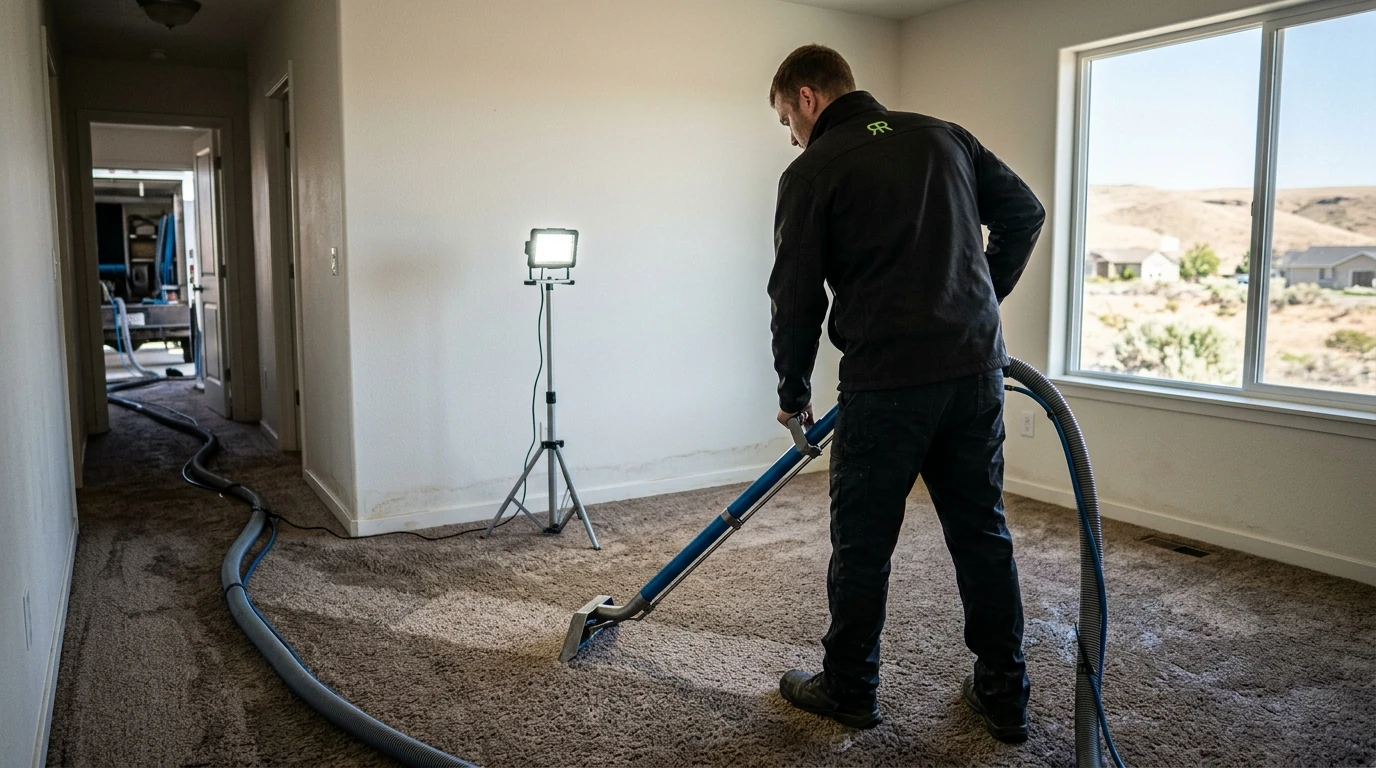
- Extraction. Standing water comes out first, using truck-mounted extractors for large volumes or portable extraction wands for carpet and upholstery.
- Equipment placement. Air movers go in to force airflow across wet surfaces, and LGR dehumidifiers pull moisture out of the air so materials don’t just re-wet each other.
- Monitoring. Daily moisture checks confirm materials are drying on schedule, usually over 3 to 5 days, before equipment comes out and the scope moves to any needed repairs.
If you’re in the first hours after a leak, our checklist for the first 24 hours after water damage covers what to do before a crew ever arrives.
Getting an accurate number for your specific situation means getting eyes on the water, not guessing from a price range online. Request a written scope that itemizes extraction, equipment days, and any drying add-ons before you sign anything.
About Restoration Resource
Restoration Resource is an IICRC Certified Firm serving Pasco, WA and the greater Tri-Cities area since 2022, licensed under WA license RESTORL764CE. The team holds IICRC WRT, ASD, AMRT, and FSRT certifications and handles water cleanup, water damage restoration, fire and smoke damage restoration, mold remediation, sewage cleanup, and storm damage restoration across Pasco, Kennewick, Richland, and surrounding communities, available 24/7.
Need help now? Call Restoration Resource at +15095281166.