
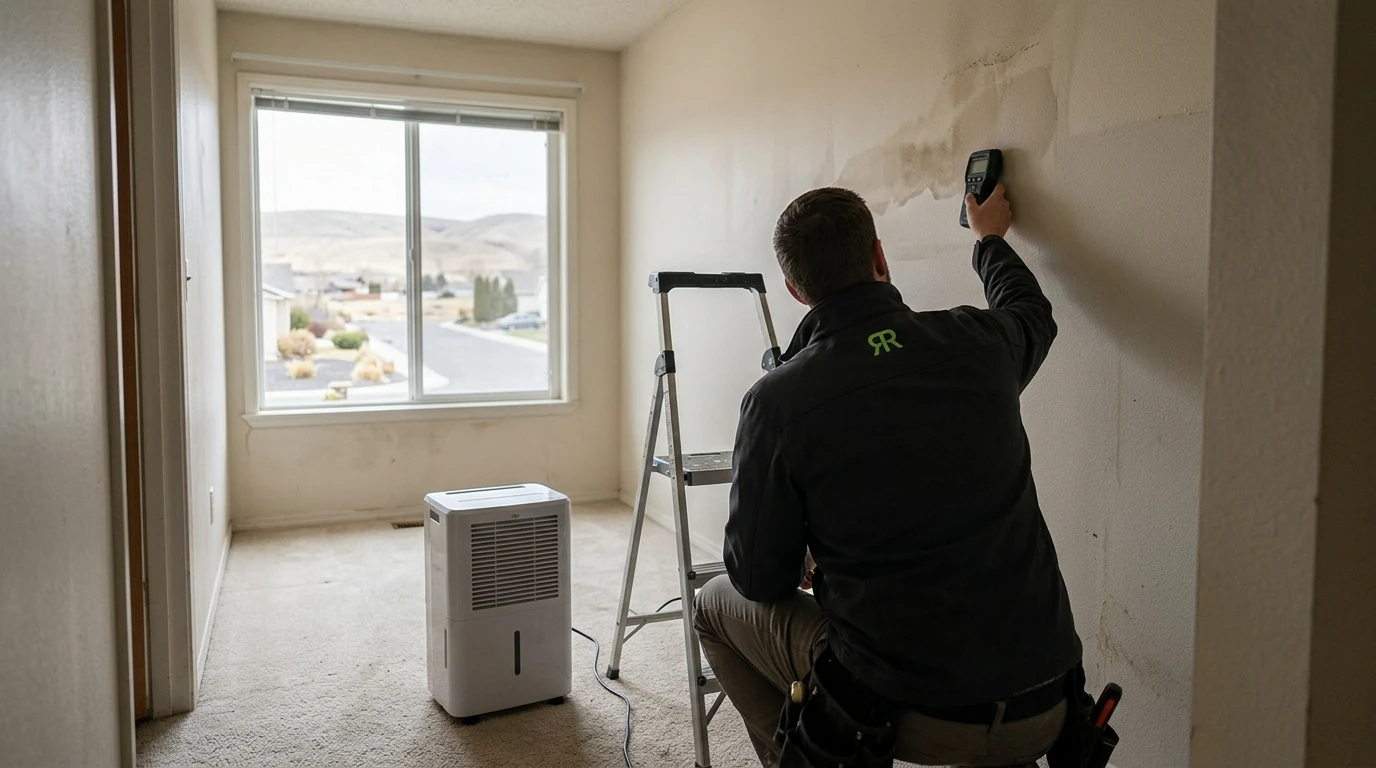
TL;DR: When a frozen pipe bursts in a rental, the tenant calls the landlord or property manager first to report the leak and get the water shut off, then the landlord (or the tenant, if the landlord can’t be reached quickly) calls a licensed water damage restoration company to start mitigation. The landlord’s insurance and maintenance duty cover the structure and the unit; the tenant’s own belongings are only protected by a renters insurance policy, if they have one.
Say you rent a duplex off Road 68 or a unit in one of Pasco’s older fourplexes, and you wake up to a ceiling stain spreading over the hallway, or water running down a wall from a burst supply line in an exterior wall that never got insulated. The first question isn’t “how bad is this” - it’s “whose problem is this to fix, and in what order.” For a frozen pipe burst, call Restoration Resource at (509) 528-1166 once the water is stopped; the firm is IICRC Certified and answers 24/7 for mitigation dispatch in Pasco, Kennewick, and Richland.
Is this the tenant’s call or the landlord’s?
Both, but in a specific order: the tenant calls the landlord immediately, and the landlord is the one who authorizes and pays for the structural mitigation and repair. Washington’s Residential Landlord-Tenant Act (RCW 59.18.070) requires a landlord to make repairs that affect the habitability of the unit within a reasonable time after notice, and a burst pipe flooding a living space clearly qualifies.
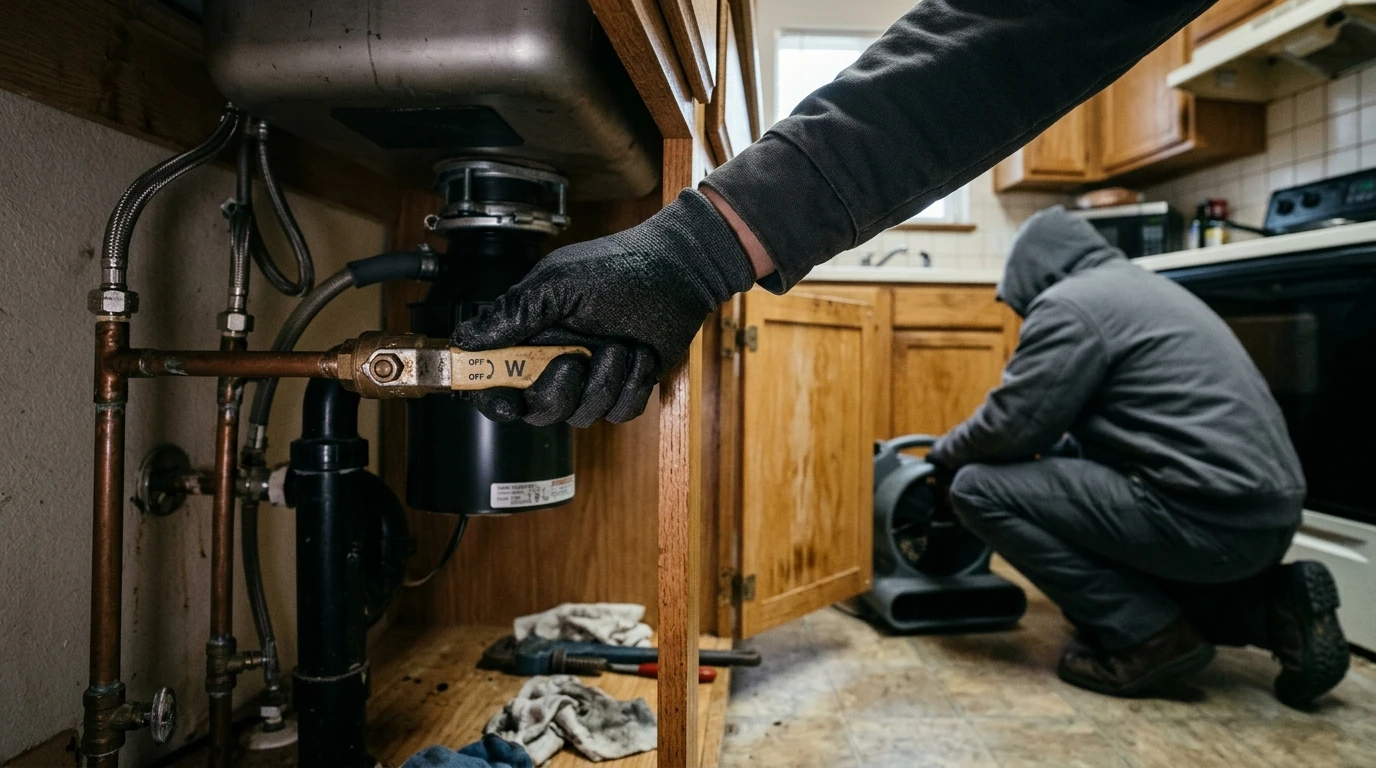
If the landlord doesn’t answer and water is actively running, the tenant should still shut off the water at the nearest valve (or the main, if the leak is behind a wall) and can call a restoration company directly to stop the damage from spreading, then loop the landlord in. Waiting hours for a callback while water soaks subfloor and drywall only makes the eventual repair bigger and the claim messier for everyone.
What should a tenant do in the first hour?
Stop the water, move your own belongings out of the wet area, and document everything before any cleanup starts. Photos and video of the damage, the source, and anything of yours that got wet are what make a claim, a security deposit dispute, or a landlord disagreement resolvable later.
Specifically: shut off the supply valve to the fixture or the home’s main if you can’t find the local one, move rugs, boxes, and furniture off wet flooring, and photograph the ceiling stain, the puddle, and any personal items (electronics, furniture, clothing) that got soaked. Keep damaged items rather than throwing them out until your renters insurer or the landlord’s adjuster has had a chance to see them. Don’t run a space heater or hair dryer on a still-frozen pipe trying to thaw it faster; that’s a common cause of a slow leak becoming a full burst.
Does renters insurance or the landlord’s policy pay for this?
The landlord’s policy generally covers the building (drywall, flooring, framing, and the mitigation work to dry it out); your renters insurance, if you carry it, covers your own belongings. A landlord’s dwelling policy almost never reimburses a tenant for a ruined mattress or laptop.
Most homeowners and landlord policies treat a sudden, accidental pipe freeze and burst as a covered peril, unlike a slow seep from neglect. The Washington Office of the Insurance Commissioner is the state resource for questions about what a specific policy covers or how to file a complaint if a claim is wrongly denied. If you don’t carry renters insurance, you’re generally on your own for your own property losses, which is the single biggest reason to carry a cheap renters policy in a market with older rental housing stock like Pasco’s.
What happens when you call a restoration company?
A licensed mitigation company stops the active loss, documents the scope for whoever’s insurance applies, and starts structural drying, usually the same day for an active leak. The crew verifies the water is off, extracts standing water, and pulls any wet material (drywall, baseboard, soaked insulation) that won’t dry in place.
They’ll also set air movers and a dehumidifier and use a moisture meter to track drying progress over the following days, following the ANSI/IICRC S500 standard for water damage work. That moisture-meter documentation becomes the paper trail the landlord’s insurer, or a renters insurer handling a contents claim, will ask for. Because the landlord typically authorizes and pays for the structural side, it’s worth the tenant confirming in writing (a text is fine) who called the restoration crew and who’s expected to cover the invoice before work starts, so there’s no dispute later.
If you’re not sure whether this is a frozen-pipe situation or a different kind of leak, our general Pasco who-to-call guide walks through the call order for homeowners, which overlaps with most of this except for who pays.
If you’re the tenant and the landlord is slow to respond while water keeps spreading, getting a water damage restoration crew out to stop the loss protects your belongings and your security deposit either way, and most mitigation companies will work directly with whichever party authorizes the job.
About the crew
Restoration Resource is an IICRC Certified Firm based in Pasco, WA, operating since 2022 under Washington contractor license RESTORL764CE. The crew holds IICRC credentials in water restoration (WRT), structural drying (ASD), mold remediation (AMRT), and fire and smoke restoration (FSRT), and answers calls 24/7 across Pasco, Kennewick, Richland, and the surrounding Tri-Cities area. Their work is reviewed at a 5.0 average across 47 Google reviews.