
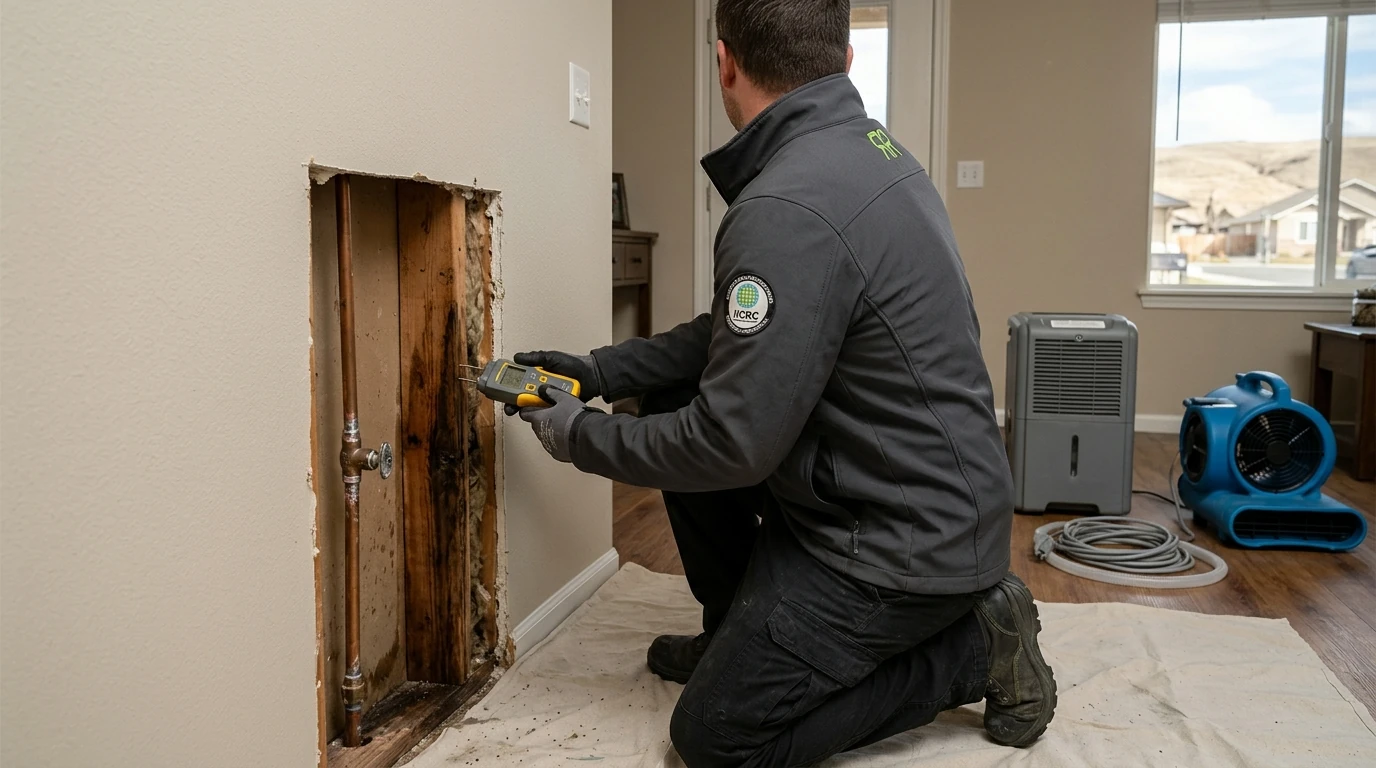
TL;DR: In Pasco, WA, cleanup and repair after a frozen pipe burst typically runs $1,500 to $4,000 for a contained, quickly-caught leak, and $8,000 to $35,000 or more when water travels through multiple floors or sits long enough to require demolition and rebuild. The biggest cost drivers are how long the water ran before anyone found it, how many building materials got wet, and whether drywall, insulation, or flooring have to be removed. Most homeowners policies cover the water damage itself; the plumbing repair is usually a separate, smaller bill.
If you just walked into a Tri-Cities home this week to find a split copper line in an exterior wall or an unheated crawl space, and water has been running since before anyone noticed, you’re probably staring at two different invoices: one from a plumber for the pipe, and one from a restoration company for everything the water touched. Those two numbers rarely match, and insurance usually only reimburses one of them in full. Here’s how the total typically breaks down.
How much does a frozen pipe burst cost to clean up in Pasco?
Most frozen-pipe water damage jobs in the Tri-Cities fall between $1,500 and $18,000, with large losses running higher. The exact number depends on how much of the structure got wet and how long it sat before drying started.
| Scenario | Typical cost range |
|---|---|
| Caught within hours, single room, clean water, no material removal | $1,500 - $4,000 |
| Water ran overnight, drywall and insulation removed in 1-2 rooms | $4,000 - $9,000 |
| Water traveled to a floor below or into a crawl space, multi-room spread | $8,000 - $18,000 |
| Extensive demolition plus full rebuild (drywall, insulation, flooring, cabinetry) | $15,000 - $35,000+ |
| Plumber’s repair of the burst pipe itself (separate from restoration) | $250 - $1,200 |
These are typical industry figures, not a quote. Every loss is different, and Restoration Resource provides a written scope of work before any demolition or drying equipment goes in, so you know what you’re approving.
What makes one frozen pipe job cost more than another?
The single biggest factor is time: a burst pipe found and shut off within an hour or two of failure costs far less than one that ran overnight or over a weekend while a family was traveling.
Water that sits for 24 to 48 hours starts breaking down drywall paper, swelling baseboards and subfloor, and creating conditions where mold can begin to grow, which adds a remediation step to the invoice. Water caught quickly can often be extracted and the structure dried in place with air movers and dehumidifiers, no demolition needed.
Other factors that move the number:
- Which floor it happened on. A burst pipe in an upstairs bathroom that drips through a ceiling into a living room below adds a second damaged area and usually a drywall ceiling patch.
- What kind of water it started as. A clean supply-line break is Category 1 water under the IICRC S500 standard, but clean water that sits against building materials for days can degrade toward Category 2, which changes how materials are handled.
- What materials got wet. Carpet and pad usually get removed and replaced rather than dried. Solid hardwood and plaster take longer and cost more to dry than vinyl plank or drywall.
- Tri-Cities housing stock. Many Pasco and Kennewick homes have slab foundations or unheated crawl spaces, and exterior hose bibs and pipes in unconditioned garage walls are common freeze points during a hard cold snap. Where a pipe sits unseen for days (a crawl space, a wall behind cabinetry), damage is usually more extensive by the time it’s found.
Plumber bill vs. restoration bill: what’s the difference?
A plumber’s invoice covers fixing the pipe itself; a restoration invoice covers everything the water damaged after it got out. These are two separate scopes of work, usually from two separate companies.
The plumber’s job is narrow: locate the break, cut out and replace the damaged section of pipe, and confirm water pressure is restored. That’s typically a few hundred to a little over a thousand dollars depending on pipe access.
The restoration bill covers extraction, drying equipment, moisture monitoring, any demolition of wet materials, antimicrobial treatment if needed, and rebuild. This is almost always the larger of the two numbers, because it scales with square footage and materials affected rather than with the pipe repair itself. If you’re not sure who to call first in the moment, our frozen pipe burst guide for Pasco walks through the call order.
What does homeowners insurance usually cover after a frozen pipe bursts?
Most standard homeowners policies cover sudden, accidental water damage from a frozen pipe, including the restoration work, but coverage can depend on whether the home was reasonably maintained against freezing. Insurance Information Institute guidance notes that sudden water damage from a burst pipe is a commonly covered peril, while damage from neglect, like leaving an unheated vacant home without the heat on through a cold snap, is often excluded.
The plumbing repair itself is sometimes excluded or subject to a separate limit, since policies generally cover the resulting damage rather than the failed part. Documentation matters either way: photos of the damage before cleanup starts, a written scope from the restoration company, and receipts for any emergency mitigation all support the claim. For state-specific coverage questions, the Washington Office of the Insurance Commissioner is the authoritative resource, and our general homeowners insurance and water damage guide covers the broader rules.
What happens during the water extraction, drying, and rebuild?
The work generally runs through three phases: get the water out, dry the structure, then rebuild anything that had to come out.
- Extraction. Standing water is pulled with truck-mounted or portable extraction equipment, usually within the first visit.
- Demolition, if needed. Drywall, insulation, or flooring that’s saturated beyond what can dry in place is removed to stop mold risk and speed drying.
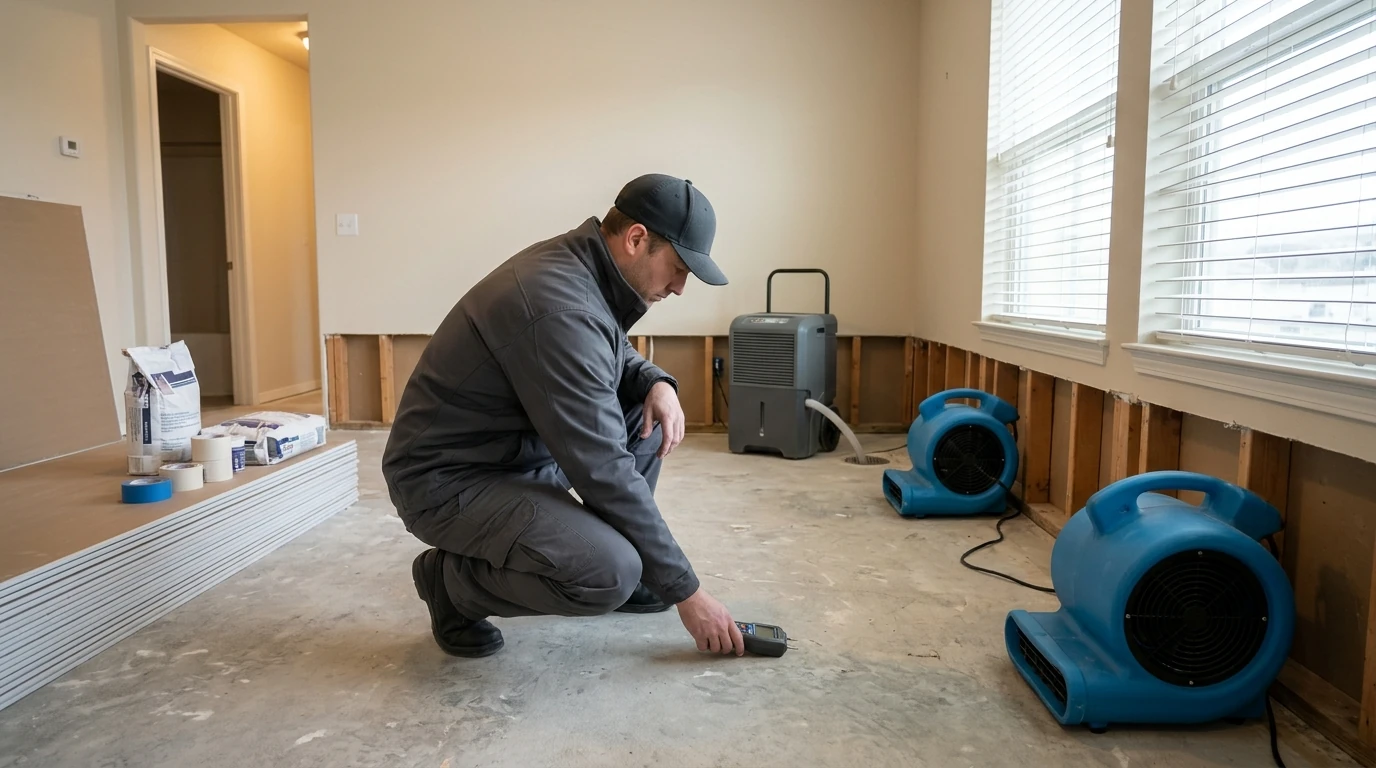
- Structural drying. Air movers and dehumidifiers run for several days, with moisture readings taken daily until wood framing and subfloor hit a dry standard.
- Rebuild. Drywall, insulation, trim, and flooring are reinstalled to match the original finish.
Each phase shows up as its own line on the invoice, which is why a job caught early (extraction and drying only) can cost a fraction of one that reaches full demolition and rebuild.
If a frozen pipe just burst, the fastest way to get an accurate number is a direct assessment, not a phone estimate. Call Restoration Resource at (509) 528-1166 to schedule a water damage assessment and get a written scope before any work starts.
About Restoration Resource
This guide was prepared by Logan Olsen and the team at Restoration Resource, an IICRC Certified Firm (license RESTORL764CE) serving Pasco, WA and the greater Tri-Cities since 2022. Their technicians hold IICRC credentials in water restoration, structural drying, mold remediation, and fire and smoke restoration, and the company handles water damage restoration, water cleanup, fire and smoke damage restoration, mold remediation, sewage cleanup, and storm damage restoration across the region.